Why Most B2B Sustainability Companies Are Invisible on LinkedIn (And How to Fix It)
The LinkedIn Landscape for B2B Sustainability Companies in 2026
LinkedIn now has over one billion members worldwide, and its share of B2B social media referral traffic continues to outpace every other platform. But the numbers that matter most for sustainability companies aren’t the macro stats — they’s the behavioral shifts happening among ESG decision-makers, procurement officers, sustainability directors, and impact investors. Here’s what’s changed heading into 2026:- Buyers are self-educating longer. According to LinkedIn’s B2B Institute research, the average B2B buying cycle now involves 6–10 decision-makers and months of passive content consumption before first contact. Your LinkedIn presence is being evaluated long before you know it.
- ESG mandates are driving new buyer personas. Chief Sustainability Officers (CSOs), ESG analysts, and sustainability procurement leads are now active LinkedIn users — and they’re using the platform to vet vendors for credibility and alignment, not just capability.
- Algorithm changes favor conversation over broadcasting. LinkedIn’s 2024–2025 algorithm updates have consistently rewarded posts that generate comments and saves over those that simply accumulate likes. For sustainability brands, this means authentic engagement beats polished announcements every time. Fresh data from Metricool’s 2026 LinkedIn report based on analysis of 673,658 posts across 63,108 accounts, confirms this shift in concrete terms. Overall engagement rate is up nearly 14% year over year, even as visible metrics like comments and shares have declined. The driver: clicks, the interaction that doesn’t show publicly, are up 4.9%. For sustainability brands, this means your content may be working harder than your dashboard suggests. Personal profiles generate 63% more engagement than company pages despite reaching roughly the same number of impressions per post, which reinforces the case for investing in executive and team voices, not just the brand page. Carousels generate 11 times more interactions than images, yet images are posted six times more often, a gap that represents a direct opportunity for sustainability brands willing to translate complex data and frameworks into structured visual content.
- Niche communities are outperforming broad audiences. LinkedIn’s newsletter, events, and collaborative articles features have made it possible to build highly targeted audiences around specific verticals — circular economy, carbon markets, cleantech, sustainable agriculture, rather than chasing generic sustainability followers.
- Thought leadership drives pipeline. LinkedIn’s own data shows that 75% of B2B buyers say thought leadership content directly influences their decision to shortlist a vendor. For sustainability companies, where trust and values alignment are table stakes, this is especially pronounced.
Foundation First: Optimizing Your LinkedIn Presence Before You Post Anything
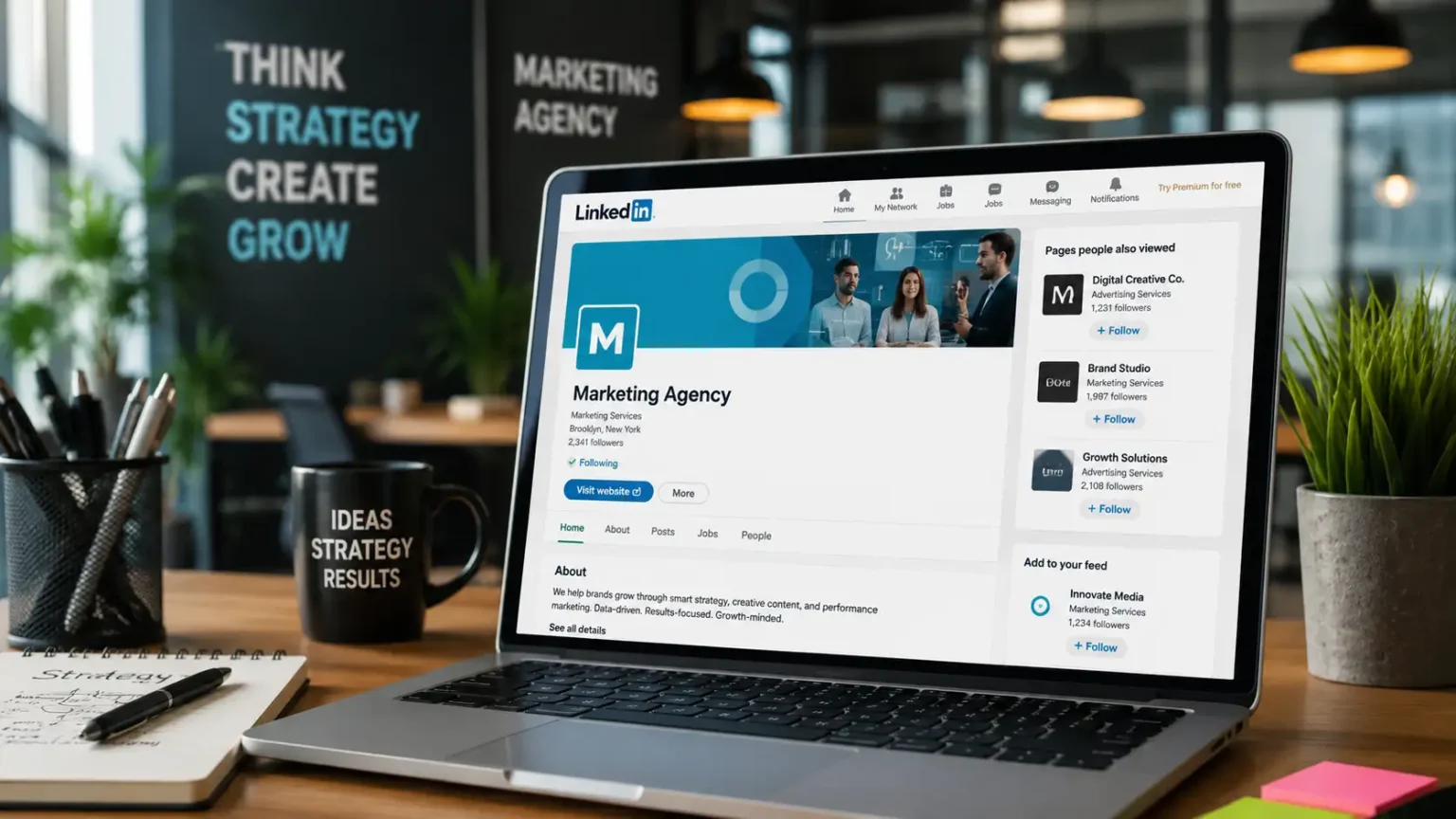
Before you think about content calendars or LinkedIn ads, you need to make sure your foundation is solid. A weak profile or company page undermines every piece of content you publish — it’s like running a great ad campaign to a broken landing page.Company Page Optimization Checklist
- Write a tagline that says what you actually do. “Creating a sustainable future” tells nobody anything. “Carbon accounting software for mid-market manufacturers” tells exactly the right people everything they need to know.
- Use your About section as a mini sales page. Lead with the problem you solve, then describe who you serve, then explain why you’re different. Include relevant keywords naturally, ESG reporting, circular economy, clean energy procurement, etc. — because LinkedIn’s search algorithm indexes this text.
- Upload a cover image that communicates your category instantly. Use it to reinforce your positioning with a clear headline, not just a nature photo or your office building.
- Complete your Specialties section. This is an underused SEO lever. List the specific services, technologies, and topic areas you operate in. LinkedIn surfaces company pages in search results based on these terms.
- Pin your best performing post or a high-value resource to the top of your page. First impressions matter. Make yours lead with value, not a company announcement from six months ago.
- Enable the “Follow” button as the primary CTA. For most B2B sustainability companies at the awareness stage, growing your audience should take priority over pushing people to a contact form before they know who you are.
- Set up a LinkedIn Newsletter. This builds a subscriber list you own within the platform and dramatically increases content reach for companies willing to publish consistently.
Personal Profile Optimization for Founders and Executives
On LinkedIn, people follow people more readily than they follow companies. Your founders, executives, and subject matter experts need optimized personal profiles that complement the company page. Key elements: a headline that goes beyond job title (e.g., “Helping manufacturers eliminate Scope 3 emissions | Co-founder at [Company]”), a banner image consistent with company branding, a first-person About section that tells a real story, and featured content that showcases your best thinking. For sustainability brands specifically, credibility markers matter enormously. Published research, speaking engagements, certifications (B Corp, LEED, ISSP), and media mentions should all be visible and current.LinkedIn Strategy for B2B Sustainability Companies: Building Your Content Engine
Content is where most sustainability companies either build a genuine competitive advantage or fade into the background. The companies that win on LinkedIn in 2026 aren’t posting more, they’re posting smarter, with a deliberate mix of content types mapped to specific business objectives.The Sustainability Content Mix That Actually Converts
Based on what’s working for B2B sustainability brands across cleantech, ESG consulting, circular economy, and green infrastructure sectors, here’s a proven content ratio to aim for:| Content Type | Recommended Frequency | Primary Goal | Example for Sustainability Brand |
|---|---|---|---|
| Thought Leadership / POV Posts | 2x per week | Build authority, attract followers | “Why carbon offsets alone won’t get your company to net zero — and what to do instead” |
| Educational / How-To Content | 1-2x per week | Generate saves and shares, demonstrate expertise | Step-by-step breakdown of how to conduct a Scope 3 emissions inventory |
| Client Results / Case Studies | 2x per month | Build trust, generate qualified pipeline | “We helped a Denver food manufacturer cut packaging waste by 40%. Here’s exactly how.” |
| Industry News Commentary | 1x per week | Relevance, SEO, timely engagement | Your take on new SEC climate disclosure rules or EU CSRD requirements |
| Team / Culture / Behind-the-Scenes | 2x per month | Humanize brand, support recruiting | Field visit to a client site, team certifications, community involvement |
| Direct Offers / Lead Gen | 2-3x per month | Generate leads, drive conversions | Free ESG readiness assessment, downloadable guide, webinar registration |
Writing Posts That Get Read (and Acted On)
LinkedIn rewards posts that stop the scroll within the first line. For sustainability companies, where the content can easily veer into dense, technical territory, this is critical. Your opening line should create a tension, challenge a common belief, or surface a counterintuitive truth. Strong openers for sustainability B2B brands:- “Most companies that say they’re sustainable aren’t. Here’s the test we use with clients.”
- “The EU taxonomy just changed the rules for green bonds. Here’s what your finance team needs to know.”
- “We lost a six-figure contract because we couldn’t answer one question about our supply chain. It made us build something better.”
Format Matters: What LinkedIn’s Algorithm Rewards in 2026
- Document carousels (PDFs): Still one of the highest-reach formats on the platform. Use them for step-by-step frameworks, data reports, and checklists your audience will save and share.
- Native video: Short-form video (60–90 seconds) shot in the field or office dramatically outperforms stock footage or over-produced brand videos. Authenticity over polish.
- Text-only posts with strong structure: Well-formatted text posts with clear line breaks and a specific insight perform extremely well, especially from personal profiles.
- LinkedIn Polls: Useful for generating engagement and gathering real market intelligence. “What’s the biggest barrier to ESG reporting in your organization?” is more valuable than any survey you’ll pay to run.
- LinkedIn Articles and Newsletters: Long-form content that compounds over time. These rank in Google, get indexed by AI systems, and can be repurposed across your entire content ecosystem.
Audience Building: Getting in Front of the Right Decision-Makers
Creating great content to an audience of 200 followers , mostly your employees and vendors , isn’t a strategy. It’s a hobby. Building the right audience is as important as the content itself, and for B2B sustainability companies, “right” means procurement leaders, sustainability directors, supply chain executives, impact investors, and policy influencers in your specific niche.Organic Audience Growth Tactics That Work
Strategic connection outreach: Have your executives connect with 10–15 target accounts per week using personalized connection requests. Reference something specific, a recent post they made, a company announcement, a shared professional interest. Generic “I’d like to connect” requests go ignored. Engagement before asking: Spend 20–30 minutes per day genuinely commenting on posts from target accounts, industry analysts, trade associations, and potential partners. Thoughtful comments on high-visibility posts put your name in front of audiences you couldn’t reach with an ad budget. This is the most underrated growth tactic on LinkedIn and one of the least practiced. Collaborative content: Co-create posts, roundups, or LinkedIn Live events with complementary brands, trade associations, or academic partners in the sustainability space. Co-authored content reaches both audiences and signals credibility through association. LinkedIn Events: Hosting virtual events, webinars, expert panels, roundtables on topics like CSRD implementation, water stewardship, or supply chain decarbonization, positions your brand as a convener and attracts exactly the decision-makers you want to reach. Hashtag strategy: Use 3–5 targeted hashtags per post. For sustainability B2B brands, a mix of broad (#ESG, #Sustainability) and niche (#CircularEconomy, #Scope3, #CleanTech) hashtags helps both algorithm distribution and discoverability from users following those tags. Understanding how social media drives real business outcomes for sustainability brands goes deeper than follower counts. Our piece on how to drive social media traffic for sustainable business websites covers the conversion side of this equation in detail.LinkedIn Ads for Sustainability Companies: When and How to Pay to Play
LinkedIn advertising is expensive compared to other platforms, cost-per-click often runs $8–$15 for B2B audiences. But for sustainability companies selling high-value services or solutions, the targeting precision makes it worth it when deployed correctly.When LinkedIn Ads Make Sense for Sustainability B2B Brands
Paid LinkedIn is most effective when you have a specific, proven offer to amplify, a gated research report, a webinar, a free assessment, or an exclusive event. Running awareness-only ads without a clear conversion pathway is where sustainability brands burn through budget without results.Targeting That Actually Works
LinkedIn’s targeting options are genuinely powerful for sustainability B2B verticals. Layer these targeting dimensions for the best results:- Job titles: Chief Sustainability Officer, VP of ESG, Director of Supply Chain, Head of Procurement, Environmental Manager
- Seniority: Director, VP, C-Suite
- Company size: Match to your ideal customer profile (ICP) — enterprise, mid-market, or SMB
- Industry: Manufacturing, energy, financial services, real estate, retail — wherever your sustainability solution applies
- LinkedIn Groups: Target members of specific sustainability and ESG professional groups
- Account-based targeting: Upload a list of target companies and serve ads exclusively to employees at those organizations
Best Ad Formats for Sustainability B2B
Thought Leader Ads (amplifying executive personal posts) are delivering strong results in 2025–2026 because they appear as promoted organic content from a real person, not a faceless brand. Single Image Ads with a bold, problem-focused headline and a clear offer work well for lead gen. Document Ads (promoted carousels) are effective for distributing research, frameworks, and guides to cold audiences. For most sustainability B2B companies, a retargeting layer is essential: users who visited your website or engaged with your LinkedIn content in the past 90 days should see different, more direct messaging than cold audiences seeing you for the first time.Employee Advocacy: Your Highest-Leverage LinkedIn Asset
Here’s a number worth sitting with: organic reach for company page posts has declined significantly over the past three years on LinkedIn. But content shared by individual employees gets, on average, 3x more reach than the same content posted from a brand page, according to LinkedIn’s own marketing research. For sustainability companies, employee advocacy isn’t just a reach multiplier — it’s an authenticity signal. When your team members genuinely share their work, their field experiences, and their professional growth in the sustainability sector, it humanizes your brand in a way no company page ever can.Only 7% of LinkedIn Company Pages grew last year. Metricool’s data makes the reason clear: pages with under 2,000 followers average 15% engagement, and pages with over one million followers average 16.86%, essentially the same rate. The algorithm doesn’t penalize small accounts. What it does reward is people. The strategic implication: a sustainability brand with a small but active team of employee advocates can compete on engagement with organizations ten times its size.
Building an Employee Advocacy Program
The mistake most companies make is telling employees to “share our company posts” and calling it a program. That produces reluctant compliance and generic reposts. Instead:- Train and equip. Run a quarterly LinkedIn workshop for your team. Cover profile optimization, what to post, and how to engage. Most employees want to build their professional brand — they just need permission and guidance.
- Create shareable assets. Give employees branded graphics, key stats, and easy-to-share templates. Make it frictionless to post on behalf of the company without making it feel scripted.
- Celebrate real work publicly. Encourage employees to document projects, certifications, site visits, and client wins in their own words. This kind of content almost always outperforms corporate communications.
- Use LinkedIn’s Employee Notifications feature. When you publish a major company post, trigger an employee notification so your team can amplify it with a single click.
- Lead from the top. If your executives aren’t active on LinkedIn, employee participation rates will be low. The tone is set at the top.
Measuring What Matters: LinkedIn KPIs for Sustainability B2B
Vanity metrics — followers, impressions, likes — are easy to track and mostly useless for demonstrating business impact. Here’s what you should actually be measuring, and how to interpret the numbers for a sustainability B2B context:| Metric | What It Tells You | Benchmark to Aim For |
|---|---|---|
| Engagement Rate (per post) | Content relevance and audience quality | 2–4% is solid for company pages; 4–8% for personal profiles |
| Comment-to-Like Ratio | Depth of audience engagement vs. passive scrolling | Aim for at least 1 comment per 10 likes |
| Profile Views (executive profiles) | Whether your content is driving profile discovery | Track week-over-week growth during active publishing periods |
| Follower Growth Rate | Audience building velocity | 5–10% monthly growth is healthy for a growing B2B brand |
| LinkedIn Referral Traffic (Google Analytics) | Whether LinkedIn is actually driving website visits | Should be growing quarter-over-quarter |
| Lead Form Completions / Demo Requests | Direct pipeline attribution | Track by campaign and content type; optimize toward highest converters |
| Sales Navigator InMail Response Rate | Outbound effectiveness | 15–25% is achievable with personalized, value-first messaging |
| Newsletter Open Rate | Subscriber quality and content relevance | LinkedIn newsletters typically see 35–50% open rates — significantly above email benchmarks |
Common LinkedIn Mistakes Sustainability B2B Companies Make
These show up repeatedly across the sustainability sector, and they’re worth naming directly:- Posting only company news. Nobody follows a brand to hear about their internal achievements. Lead with insight and education; let the company news follow naturally.
- Using passive, jargon-heavy language. “Leveraging synergistic solutions for a more sustainable future” communicates nothing. Say what you do, plainly.
- Greenwashing — even accidentally. Overclaiming impact, using vague sustainability language without evidence, or posting Earth Day content while having no verifiable sustainability commitments will damage your credibility with sophisticated B2B buyers who know the difference. LinkedIn is where ESG-literate professionals work. They notice.
- Ignoring comments. Every unanswered comment is a missed relationship. Respond to everyone who engages with your content, especially in the first 60–90 minutes after posting, when LinkedIn’s algorithm is evaluating whether to expand your reach.
- Treating LinkedIn like Twitter. Short hot takes work occasionally, but LinkedIn rewards depth, professionalism, and educational value. The best performing content on LinkedIn tends to be longer and more substantive than on other platforms.
- Neglecting LinkedIn Sales Navigator. For companies with a defined ICP and a sales team, Sales Navigator is one of the most underutilized tools in the B2B sustainability stack. The account and lead monitoring features alone can transform outbound efficiency.
- Inconsistency. Going dark for two months and then posting five times in a week signals to both the algorithm and your audience that LinkedIn isn’t a priority. Consistent, predictable publishing beats sporadic intensity every time.
LinkedIn in the Context of Your Full Digital Marketing Stack
LinkedIn doesn’t exist in isolation. The most effective B2B sustainability marketing programs in 2026 treat LinkedIn as one node in a connected system, where content flows intelligently between channels and each platform reinforces the others. A LinkedIn post that generates strong engagement can become an email newsletter section, a blog post, a podcast topic, a sales conversation starter, or a paid ad. The reverse is equally true: long-form blog content and research reports feed LinkedIn articles and carousels. Webinars generate clip content for LinkedIn video. Client case studies become LinkedIn posts that get shared by the client themselves. For sustainability B2B companies investing in green marketing, understanding how to allocate effort across channels, and how to build a coherent brand voice across all of them — is foundational. Our guide to green marketing strategy: how to attract eco-conscious customers addresses that broader strategic layer and pairs well with this LinkedIn-specific playbook. You should also be paying attention to how AI tools are changing content creation and distribution for sustainability brands. McKinsey’s research on generative AI in marketing shows that content velocity and personalization are both increasing across B2B sectors — LinkedIn is no exception, and sustainability brands that ignore this shift will fall further behind competitors who embrace it thoughtfully.Your 90-Day LinkedIn Launch Plan for Sustainability B2B Companies
If you’re starting from scratch or rebuilding after a period of inactivity, here’s a phased approach designed for sustainability B2B companies specifically:Days 1–30: Foundation and Positioning
- Audit and rewrite company page copy, tagline, and About section with clear, jargon-free positioning
- Update all executive and key team member profiles with aligned messaging
- Identify your top 5 content themes aligned to buyer pain points and your services
- Build a content calendar for the first 30 days (minimum 4 posts per week)
- Define your target audience personas and build an initial list of 50–100 target accounts
- Set up LinkedIn Newsletter and publish your first edition
- Run a baseline audit of current followers, engagement rate, and referral traffic
Days 31–60: Content and Community
- Publish consistently across all content types — thought leadership, education, case studies
- Have each executive connect with 10–15 target accounts per week with personalized outreach
- Engage daily for 20–30 minutes on content from target accounts and industry voices
- Host your first LinkedIn Live or virtual event on a topic your buyers care about
- Launch a pilot employee advocacy effort with 3–5 willing team members
- Review your first 30-day analytics and identify what’s resonating
Days 61–90: Amplification and Optimization
- Launch a targeted LinkedIn ad campaign to amplify your best performing organic content or a specific lead gen offer
- Build a retargeting audience from website visitors and LinkedIn content engagers
- Scale employee advocacy to the full team
- Test LinkedIn document carousels and native video formats
- Conduct a 90-day performance review: follower growth, engagement rate, referral traffic, leads generated
- Use insights to set your Q2 content and growth targets
Frequently Asked Questions
How often should B2B sustainability companies post on LinkedIn?
For most B2B sustainability companies, posting 4–5 times per week from the company page is the sweet spot for 2026. This frequency is enough to build algorithmic momentum and stay visible in your audience’s feeds without sacrificing content quality. Consistency matters more than volume — a company that posts three high-quality pieces per week every week will outperform one that posts seven times one week and disappears for three weeks. On personal executive profiles, 3–4 posts per week is realistic and impactful. The key is building a sustainable cadence your team can actually maintain.What types of content perform best for ESG and sustainability B2B companies?
Educational content that addresses real buyer pain points consistently outperforms promotional content for ESG and sustainability B2B brands. Posts that break down complex topics — like how to navigate CSRD reporting, how to measure Scope 3 emissions, or what the SEC’s climate disclosure rules mean for your industry — generate strong saves, shares, and comments from exactly the decision-makers you want to reach. Case studies with specific, quantified results (not vague impact claims) are the highest-converting content type for driving actual pipeline. Document carousels and native video also deliver above-average reach compared to image posts or links.Is LinkedIn advertising worth the cost for sustainability companies with small budgets?
LinkedIn ads are generally not the right first investment for sustainability companies with limited marketing budgets. The minimum effective spend to generate statistically meaningful data is typically $1,500–$3,000 per month, and cost-per-lead in B2B sustainability verticals can run $150–$400+. Before spending on LinkedIn ads, make sure your organic foundation is solid: your profile is optimized, your content is consistently driving engagement, and you have a specific, proven offer to promote. Once those conditions are met, LinkedIn ads , especially Thought Leader Ads and Document Ads — can deliver excellent returns for high-value B2B sustainability products and services.How can sustainability companies avoid greenwashing on LinkedIn?
The sustainability community on LinkedIn is highly literate when it comes to greenwashing — and increasingly so are procurement teams, investors, and regulators. To avoid greenwashing on LinkedIn, only make claims you can substantiate with data, certifications, or third-party verification. Avoid vague language like “eco-friendly,” “sustainable,” or “carbon neutral” without explaining what those terms actually mean in your context. Share your progress honestly, including where you’re still improving — sustainability audiences respect transparency far more than perfection. Reference your actual certifications (B Corp, ISO 14001, LEED, SBTi targets) and link to your published sustainability reports when making material claims.What is the best LinkedIn strategy for B2B sustainability companies that are just getting started?
The best LinkedIn strategy for B2B sustainability companies starting from zero is to focus on three things in order: foundation, consistency, and amplification. Start by getting your company page and executive profiles fully optimized with clear, specific positioning. Then commit to a consistent publishing cadence, four times per week is achievable for most companies, focused primarily on educational and thought leadership content, not self-promotion. Only after you’ve established that baseline consistency should you invest in paid amplification or more complex tactics like LinkedIn events or newsletter marketing. It typically takes 60–90 days of consistent effort before you see meaningful organic momentum, so patience and discipline in the early stages are essential.Should sustainability B2B companies use LinkedIn Sales Navigator?
For any B2B sustainability company with a defined sales process and an ICP (ideal customer profile) that can be described in terms of job title, company size, and industry, LinkedIn Sales Navigator is worth the investment. The platform’s account and lead monitoring features allow your sales team to track when target accounts post content, get mentioned in the news, or experience leadership changes — all of which are valuable signals for outreach timing. Sales Navigator’s advanced search filters also let you build highly targeted prospect lists that far exceed what’s possible with a free LinkedIn account. For companies running account-based marketing (ABM) programs in the sustainability sector, it’s essentially a prerequisite.How do you measure ROI from LinkedIn for a B2B sustainability company?
Measuring LinkedIn ROI for B2B sustainability companies requires connecting platform metrics to actual business outcomes, not just engagement numbers. Set up UTM parameters on all LinkedIn links so you can track referral traffic from LinkedIn in Google Analytics. Use LinkedIn’s built-in analytics to track impressions, engagement rate, and follower growth over time. For paid campaigns, track cost-per-lead and cost-per-qualified-lead against your average deal size and sales cycle. Ask new clients and leads how they first heard about your company, you’ll often find LinkedIn is influencing purchase decisions even when it’s not the direct attribution source. Build a quarterly dashboard that combines platform data with CRM data to get the clearest picture of LinkedIn’s contribution to revenue.Ready to Build a LinkedIn Presence That Actually Grows Your Sustainability Business?
Executing a serious LinkedIn strategy for B2B sustainability companies requires more than a content calendar and good intentions. It requires deep understanding of your buyers, clear brand positioning, a consistent publishing system, and the patience to build real audience relationships over time. For many sustainability companies, that’s a lot to take on while also running the business. Planet Media LLC works exclusively with sustainability-focused companies — from cleantech startups to established ESG consultancies, to build LinkedIn strategies that generate real visibility, real relationships, and real pipeline. We don’t run generic social media playbooks. We build content systems rooted in your specific market, your specific buyers, and the specific story only your brand can tell. If your LinkedIn presence isn’t generating the business impact you know it should, let’s talk. Visit our contact page to schedule a strategy conversation with our team. We’ll take an honest look at where you are, where you want to go, and what it will actually take to get there , no fluff, no generic advice, just a clear path forward built for the sustainability sector.
Related Articles
- Sustainability Trends for 2025
- How Can You Persuade Others To Adopt Your Sustainability Strategy?
- Are Companies Putting Their Sustainability Initiatives on Hold?
- Does Your Company Have a Sustainability Policy?
- What Does Real Sustainability Look Like?